

Isolation is a risk factor for developing loneliness.1 Social isolation is consistently associated with reduced well-being, health, and quality of life. It causes negative psychological outcomes such as depression and anxiety. It can even be life-threatening. “Loneliness is as lethal as smoking 15 cigarettes a day,” says researcher Julianne Holt-Lunstad. 2 Subjective feelings of loneliness can increase the risk of death by anywhere from 26% to 45%.3
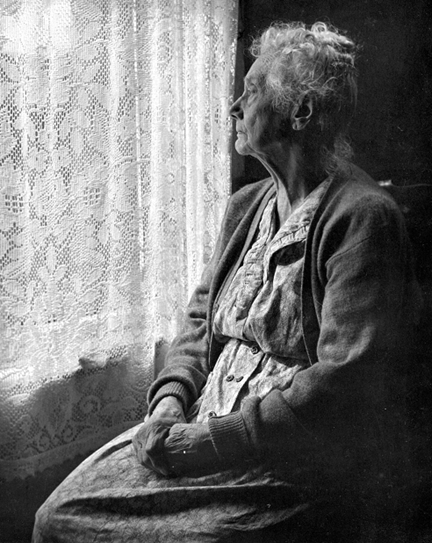
Many people feel lonely under the best of circumstances. When a crisis like the COVID-19 pandemic loomed out of control, our capacity to deal with it was quickly overwhelmed. Individuals struggled to find a way through the confusion, fear, and painful losses that came with this crisis. Expectations for high-quality nursing home care changed with the sudden loss of connections to family, friends, volunteers and health and social services staff. Loneliness is a common source of distress, suffering, and impaired quality of life in older persons.4
Covid-19 Exposed an Existing Problem
Prior to the pandemic, The National Academy of Sciences, Engineering, and Medicine book, “Social Isolation and Loneliness in Older Adults,” published in 2020 reports approximately one-quarter (24%) of community-dwelling Americans aged 65 and older are considered to be socially isolated and a significant proportion of adults in the United States report feeling lonely (35% of adults aged 45 and older and 43% of adults aged 60 and older).5 Loneliness is even more common in long-term care institutions. The prevalence of severe loneliness among older people living in care homes is at least double that of community-dwelling populations. 6 One study found that more than half of nursing home residents without cognitive impairment reported feeling lonely.7

Measuring social isolation and loneliness precisely is hard. There is strong evidence that many adults aged 50 and older remain socially isolated or lonely in ways that put their health at risk. Recent studies found that:5
- Social isolation significantly increased a person’s risk of premature death from all causes. It’s a risk that may rival those of smoking, obesity, and physical inactivity.
- Social isolation was associated with about a 50% percent increased risk of dementia.
- Poor social relationships is characterized by social isolation or loneliness. This condition is associated with a 29% increased in risk of heart disease and a 32% increased risk of stroke.
- Loneliness among heart failure patients was associated with a nearly four times increased risk of death. A 68% increased risk of hospitalization, and 57% increased risk of emergency department visits.
KEY DEFINITIONS
Social Isolation: While researchers recognize a variety of definitions for social isolation, it is accepted to define social isolation as. An experienced or perceived lack of personal relationships with family, friends, and acquaintances on which people can rely in case of need.
Spiritual Distress: Spiritual distress is the impaired ability to experience and integrate meaning and purpose in life through connectedness. This includes self, others, art, music, literature, nature, and/or a power greater than oneself.
Spirituality: Spirituality is a dynamic and intrinsic aspect of humanity through which persons seek ultimate meaning, purpose and transcendence. This experience comes from relationship to self, family, others, community, society, nature, and the significant or sacred. Spirituality is expressed through beliefs, values, traditions, and practices.
Resilience: Resilience is the ability to withstand, recover, and sometimes grow when faced with adversity. It is an active process of enduring and successfully coping. Resilience is bouncing back after a crisis. It is also bouncing forward to adjust to a “new normal.”
REFERENCES
- Span P. Just What older people didn’t need: More isolation. https://www.nytimes.com/2020/04/13/health/coronavirus-elderly-isolation-loneliness.html https://www.ncbi.nlm.nih.gov/pmc/articles/PMC7205644/#bib13
- Julianne Holt-Lunstad, PhD, The Potential Public Health Relevance of Social Isolation and Loneliness: Prevalence, Epidemiology, and Risk Factors, Public Policy & Aging Report, Volume 27, Issue 4, 2017, Pages 127–130, https://doi.org/10.1093/ppar/prx030
- Andrew Steptoe, Aparna Shankar, Panayotes Demakakos, Jane Wardle Social isolation, loneliness, and mortality Proceedings of the National Academy of Sciences Apr 2013, 110 (15) 5797-5801; DOI: 10.1073/pnas.1219686110
- Health Affairs, The Importance Of Nursing Home Transparency And Oversight, Even In The Midst Of A Pandemic https://www.healthaffairs.org/do/10.1377/hblog20200511.431267/full/
- Blazer D.G. National Academies of Sciences, Engineering, and Medicine. 2020. Social Isolation and Loneliness in Older Adults: Opportunities for the Health Care System. Washington, DC: The National Academies Press.
- Victor C.R. Loneliness in care homes: A neglected area of research? Aging Health. 2012; 8:637–646. [Google Scholar] https://www.ncbi.nlm.nih.gov/pmc/articles/PMC7205644/#bib13
- Drageset J., Kirkevold M., Espehaug B. Loneliness and social support among nursing home residents without cognitive impairment: A questionnaire survey. Int J Nurs Stud. 2011; 48:611–619. [PubMed] [Google Scholar] https://www.ncbi.nlm.nih.gov/pmc/articles/PMC7205644/#bib13
